
How Often Should Pest-Control Glue Boards Be Checked and Replaced?
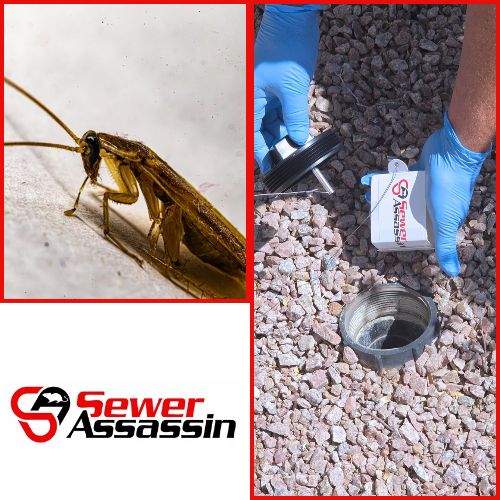
Glue boards are simple monitoring tools, but the information they provide is only useful when they are inspected consistently, kept in serviceable condition, and properly documented.
A board that remains unnoticed behind a piece of equipment for several months may contain insects, dust, grease, or moisture—but it may no longer provide an accurate picture of current pest activity. Effective monitoring requires more than placing a board and waiting for the next scheduled service.
So how often should pest-control glue boards be checked and replaced? The answer depends on the pest pressure, the environment, the purpose of the monitor, and the conditions surrounding it.
There Is No Single Schedule for Every Account
Recognized integrated pest management practices are built around routine inspection, accurate identification, monitoring, documentation, and decisions based on the results. The correct schedule should therefore match the risk at the account rather than rely on one universal replacement date.
As a practical guideline:
- New or active infestations: Check boards daily, or as frequently as access allows, during the initial assessment. The University of California Statewide IPM Program recommends checking cockroach traps daily at first so the areas producing the greatest captures can be identified.
- High-risk or sensitive accounts: Inspect at least weekly, and more frequently when pest pressure, sanitation conditions, audit requirements, or customer concerns justify it.
- Established routine-monitoring programs: Inspect every board during each scheduled pest-control service. Monthly service may be appropriate for a stable, low-pressure location, but only if the account’s risk level and monitoring history support that interval.
- After treatment or corrective work: Recheck soon enough to determine whether activity is declining. Waiting until the next distant service visit can delay necessary adjustments.
- After a new complaint: Inspect the existing monitors immediately and add boards near the reported activity when needed.
The inspection frequency should increase when captures rise, conditions change, or a persistent problem is being investigated. It may be reduced after control has been established, provided the monitoring program remains consistent.
Check the Board—Do Not Just Count the Pests
Each inspection should evaluate both the captures and the condition of the monitoring board.
Look for:
- The pest species captured
- The number of pests on the board
- Adult and immature life stages
- The location and orientation of each capture
- Changes compared with previous inspections
- Evidence that activity is moving toward or away from a particular area
- Ants or other insects removing captured specimens
- Dust, grease, water, or debris covering the adhesive
- A board that has shifted away from the intended travel route
One cockroach on the correct board may be more informative than several captures on a board that was poorly placed. The purpose is to understand where the pest is coming from, where it is traveling, and whether the control strategy is working.
When Should a Glue Board Be Replaced?
A glue board should be replaced whenever its ability to capture pests or provide reliable information has been reduced. Do not wait for a predetermined date if the board has already become ineffective.
Replace the board when:
- The adhesive is covered with dust, grease, food particles, hair, or debris.
- The board becomes wet or is exposed to excessive humidity or condensation.
- Cleaning solutions, pesticides, or other chemicals contaminate the surface.
- The board is crushed, folded incorrectly, damaged, or moved out of position.
- Captured insects cover enough of the adhesive to reduce the available monitoring area.
- The board can no longer be read or the captures can no longer be identified accurately.
- The adhesive has dried out or lost its tack.
- The manufacturer’s recommended service life has been reached.
A clean board in a protected location may remain usable longer than one placed near a floor drain, beneath greasy cooking equipment, or inside a damp mechanical room. Condition—not age alone—should determine whether the board is still serviceable.
Moisture Can Quickly Make a Board Unreliable
Glue boards are often needed most in the same areas where moisture is common: beneath sinks, near floor drains, around water heaters, inside mechanical rooms, and along plumbing pathways.
Direct water contact can reduce the effectiveness of the adhesive, distort the board, wash away evidence, or make captures difficult to interpret. Condensation, repeated washdowns, leaks, and high humidity can cause similar problems over time.
Place boards close enough to monitor the suspected route but far enough away to remain dry. When a board must be used in a damp environment, protect it from direct water and inspect it more frequently.
If the monitor repeatedly becomes wet, correct the moisture source when possible or select a nearby protected placement that still intersects the pest’s travel path.
Contamination Can Hide the Real Activity Level
Dust, flour, grease, food residue, and airborne debris can coat a glue surface long before the board appears full. In commercial kitchens, warehouses, mechanical areas, and production facilities, a contaminated board may stop performing effectively even though only a few insects are visible.
Chemical contamination can also affect results. Cleaning products and pesticide applications may damage the adhesive, repel pests from the area, or make comparisons with earlier boards unreliable.
Technicians should avoid spraying directly on or immediately around monitoring boards unless the product directions and treatment plan specifically allow it. When contamination occurs, replace the board and document why it was changed.
Documentation Turns Captures Into Useful Evidence
Industry-standard IPM programs depend on recorded monitoring results. The U.S. Environmental Protection Agency describes IPM as a cycle of inspection, identification, monitoring, evaluation, and selecting the appropriate control method. EPA guidance for buildings also recommends recording monitoring results and inspection findings so the plan can be updated in response to what the evidence shows.
Each board should have a unique number or location identifier. At every inspection, record:
- The date inspected
- The exact location
- The target pest and species, when identifiable
- The number and life stages captured
- The condition of the board
- Whether it was left in place or replaced
- Sanitation, moisture, structural, or plumbing conditions observed nearby
- Treatments or corrective actions performed
- The recommended follow-up date
A site map or digital log makes the information even more valuable. Over time, capture trends can reveal a developing infestation, a recurring entry route, the effectiveness of treatment, or a problem that standard interior service is not reaching.
Avoid the “Set It and Forget It” Approach
Monitoring boards are not control devices by themselves. Their value lies in the decisions they help the pest professional make.
If a board repeatedly captures cockroaches in the same area, simply replacing it every month does not solve the problem. The technician must interpret the evidence, inspect the surrounding conditions, identify the likely source, and adjust the control strategy.
Repeated captures near floor drains, cleanouts, pipe penetrations, restrooms, or mechanical rooms may indicate that the plumbing system deserves closer attention—particularly when American cockroaches or drain flies continue to reappear after standard treatments.
Sewer Assassin Monitoring Is Different
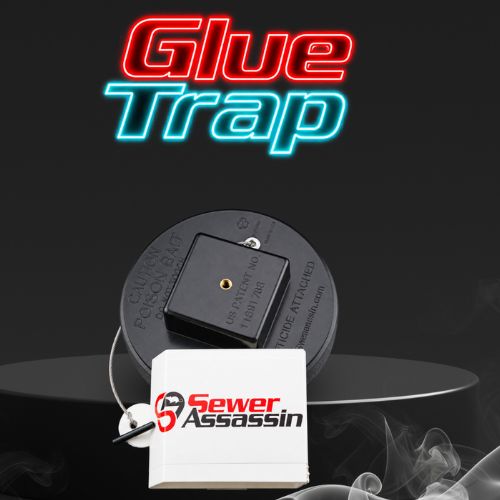
Most glue boards monitor the occupied area around the suspected pest route. The Sewer Assassin™ Monitoring Glue Board is designed to answer a more specific question: Is the pest we are battling inside also present in the plumbing system?
The compact 4-inch-by-2-inch board works with the Sewer Assassin Plumbing Monitor and Control Station and can be placed directly inside a 3-inch or 4-inch cleanout. Instead of waiting through multiple retreatments and callbacks before considering the plumbing, the technician can monitor the system itself.
Because the purpose is rapid confirmation, the initial inspection should be scheduled promptly—often within 24 to 48 hours when conditions and account access allow. If the target drain flies or American cockroaches are captured inside the cleanout, the board has done its job: it has provided evidence that pest activity is present in the plumbing.
That evidence determines the next course of action.
If the pest population is established inside the plumbing, the Sewer Assassin station can be converted from monitoring to treatment using a product specifically labeled for that application. If the pests are escaping from the plumbing into the structure, a professional plumbing smoke test can help locate the broken pipe, failed seal, open connection, or other breach that needs to be repaired.
Once plumbing activity has been confirmed, the answer is not to leave the same monitoring board in place indefinitely. The answer is to act on the information:
- Confirm the target pest inside the plumbing.
- Document the capture and compare it with the interior activity.
- Treat the pest directly within the plumbing when the selected product label permits it, or investigate for a plumbing breach.
- Repair confirmed openings or damaged plumbing.
- Monitor again to verify that the corrective action worked.
Get the Answer Before the Account Is at Risk
Recurring pests can quickly damage a customer’s confidence. When a problem returns after several services, the customer may believe the pest-control program is failing—even when the true source is hidden inside plumbing that standard treatments cannot reach.
The Sewer Assassin monitoring system is intended to provide evidence early, before a technician is forced into repeated callbacks, unnecessary retreatments, or a plumbing conclusion reached only after the account is already at risk.
Routine glue boards tell you where activity is occurring throughout the account. The Sewer Assassin Monitoring Glue Board can tell you whether the plumbing itself is part of the problem.
Inspect consistently. Replace boards when conditions make them unreliable. Document every meaningful capture. Most importantly, use the evidence to take the correct action.
Stop guessing. Find the source—and close the final gap in your pest-control program: the plumbing.
Always read and follow the label for every pesticide used. The label is the law.
Frequently Asked Questions
How often should pest-control glue boards be checked?
There is no single inspection schedule that works for every account. New or active infestations may require daily checks, while high-risk accounts may need weekly inspections. In established monitoring programs, technicians should inspect each board during every scheduled pest-control service. Inspection frequency should increase when pest activity rises or site conditions change.
How often should glue boards be replaced?
Glue boards should be replaced when they can no longer capture pests effectively or provide reliable monitoring information. Dust, grease, moisture, chemicals, damage, heavy captures, or loss of adhesive tack are all reasons to replace a board, even if it has not reached a predetermined replacement date.
Can moisture make a glue board ineffective?
Yes. Water, condensation, leaks, washdowns, and high humidity can reduce adhesive performance and make captures harder to interpret. Glue boards used near drains, plumbing fixtures, mechanical rooms, or other damp areas should be protected from direct moisture and inspected more frequently.
What information should pest-control technicians record when checking glue boards?
Technicians should document the inspection date, board location, pest species, number and life stages of pests captured, condition of the board, whether it was replaced, nearby sanitation or moisture issues, corrective actions performed, and the recommended follow-up date.
Are glue boards considered a pest-control treatment?
Glue boards are primarily monitoring tools. Their purpose is to help pest professionals identify where activity is occurring, compare changes over time, locate possible pest routes, and determine whether additional treatment or corrective action may be needed.
Can glue boards help determine if pests are coming from plumbing?
Traditional glue boards can show activity around drains and plumbing areas, but the Sewer Assassin™ Monitoring Glue Board is designed specifically to help determine whether pest activity is present inside the plumbing system.
How does the Sewer Assassin™ Monitoring Glue Board work?
The compact 4-inch-by-2-inch monitoring board works with the Sewer Assassin™ Plumbing Monitor and Control Station and can be positioned inside a 3-inch or 4-inch cleanout. It allows pest professionals to monitor the plumbing system itself for activity from pests such as American cockroaches or drain flies.
How soon should a Sewer Assassin™ Monitoring Glue Board be checked?
When the goal is to determine whether pest activity is present inside the plumbing system, an initial inspection may be scheduled within 24 to 48 hours when site conditions and account access allow. Captures can provide evidence that the plumbing system is contributing to the pest problem.
What should a technician do if pests are found inside the plumbing system?
The technician should document the capture and determine the appropriate next action. Depending on the findings, that may include treatment using a product specifically labeled for the application or further investigation for a plumbing breach. A professional plumbing smoke test can also help identify broken pipes, failed seals, open connections, or other potential openings.
Should the same monitoring board be left inside the plumbing indefinitely?
No. Once the board has provided useful evidence, the technician should act on the findings. After treatment, plumbing repairs, or other corrective measures, monitoring can be performed again to help verify whether the corrective action was effective.