
Fog Testing vs Dye Testing vs Camera Inspections:
Which Is Best for Plumbers?

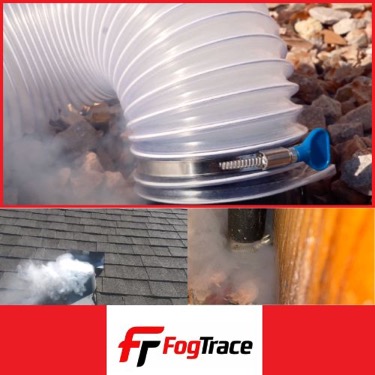
Understanding Fog Testing in Plumbing
Fog testing works by pushing a dense, non-toxic fog through a plumbing system. When the fog escapes, it reveals cracks, leaks, or openings that would otherwise be hard to find.
This method is especially effective for identifying sewer gas leaks, broken pipes, vent issues, and even pest entry points. It also gives plumbers a major advantage because the results are highly visible, making it easier to show customers exactly what’s going on and get approvals faster.
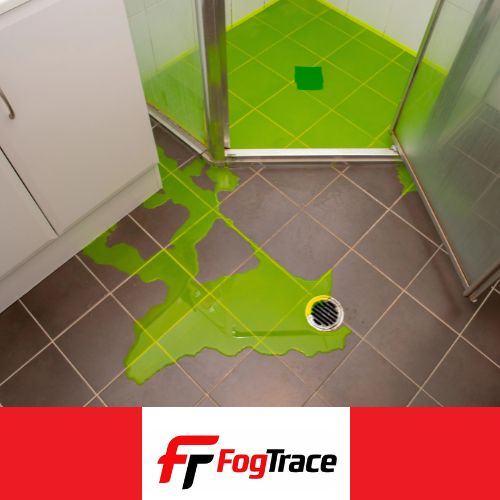
When Dye Testing Makes Sense
Dye testing involves adding colored dye to water and tracking how it moves through the plumbing system. It’s a simple way to confirm whether a leak exists or to understand how water is flowing.
This method works best for slow leaks, drainage tracking, and cross-connections. However, it doesn’t detect gas leaks and usually takes longer to produce clear, visible results compared to fog testing.
What Are Camera Inspections Are Best For
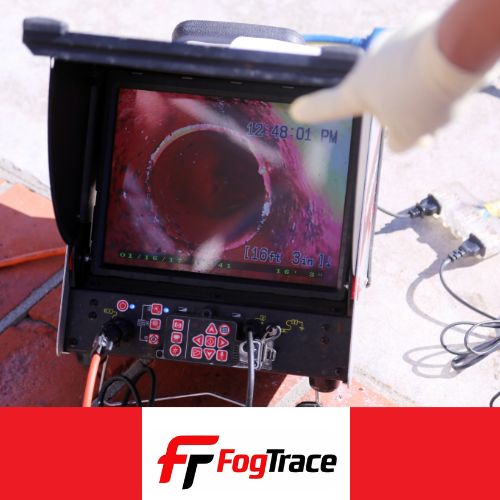
Camera inspections use a waterproof camera to look inside pipes and identify visible problems. This allows plumbers to clearly see blockages, cracks, root intrusion, and overall pipe condition.
While cameras are great for confirming structural issues, they have limitations. They can’t detect gas leaks and may miss small openings that aren’t directly in view of the camera.
Fog Testing vs Dye Testing vs Camera Inspections: What’s the Difference?
Each method serves a different purpose, and understanding those differences is key. Fog testing stands out for speed and visibility, especially when diagnosing leaks across larger systems.
Dye testing is more limited but useful for tracking water movement, while camera inspections provide detailed visuals inside pipes. In real-world situations, most plumbers rely on a combination of these tools to get the full picture.
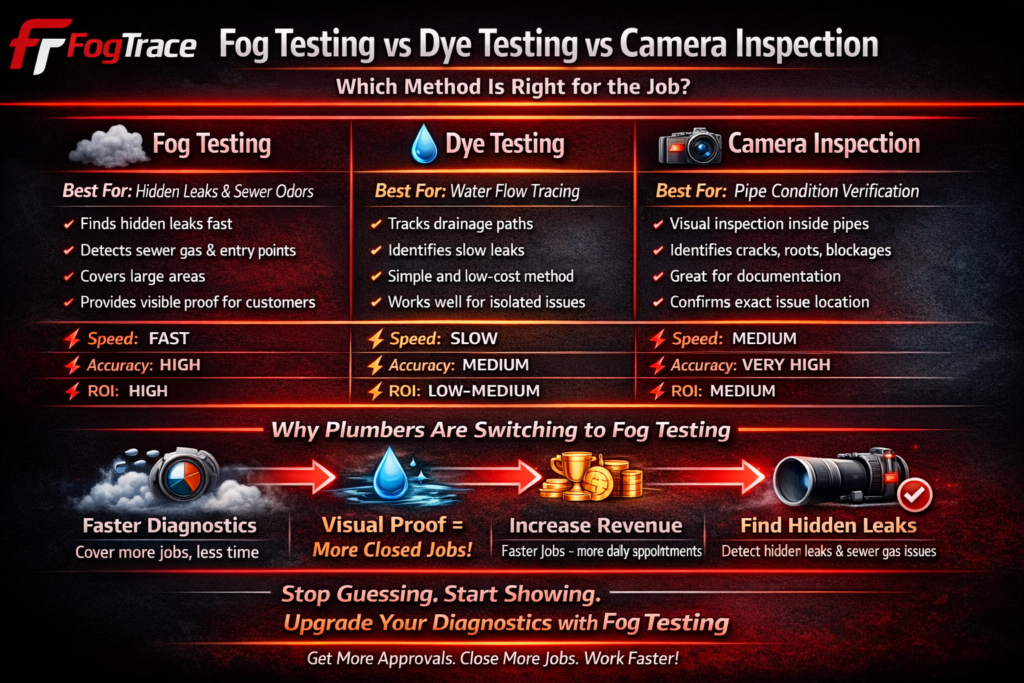
Fog Testing vs Dye vs Camera: Which Method Is Right for the Job?
The best method depends on the problem you’re trying to solve. If you’re dealing with hidden leaks, sewer odors, or multiple possible issues, fog testing is usually the fastest and most effective starting point.
Dye testing is helpful when you need to trace water flow, and camera inspections are ideal for verifying pipe condition. A smart approach is to use fog testing first, then follow up with a camera inspection to confirm and document the issue.
Why More Plumbers Are Switching to Fog Testing
As jobs become more competitive, speed and accuracy matter more than ever. Fog testing allows plumbers to diagnose issues quickly and cover more area in less time.
It also provides clear visual proof, which builds trust with customers and increases the chances of getting the job approved. Instead of trying to explain the issue, you can show it—and that makes a big difference.
Upgrade Your Workflow with FogTrace™Plumbing Smoke Test Machine
If you’re still using outdated smoke candles, upgrading your equipment can make a big impact on your business. The FogTrace™ plumbing smoke test machine is designed to give plumbers a faster, cleaner, and more efficient way to diagnose problems.
With FogTrace™, you can produce consistent, high-visibility fog without open flames or ongoing costs per test. This helps you work faster, reduce callbacks, and take on more jobs with confidence.
If you want to improve your diagnostics and close more jobs, FogTrace™ gives you a clear advantage.
See How This Smoke Test Machine Finds Leaks in Minutes (View Product)
FAQ: Smoke Testing for Sewer Gas Odors
What is the best method for detecting plumbing leaks?
Fog testing is one of the most effective methods, especially when combined with camera inspections for confirmation.
Can dye testing detect sewer gas leaks?
No, dye testing only tracks water flow and cannot detect gas leaks.
Do plumbers still use smoke testing?
Yes, modern fog testing is widely used because it’s faster, safer, and more efficient.
Is a camera inspection enough on its own?
Not always. While it’s great for visual inspection, combining it with fog testing provides a more complete diagnosis.